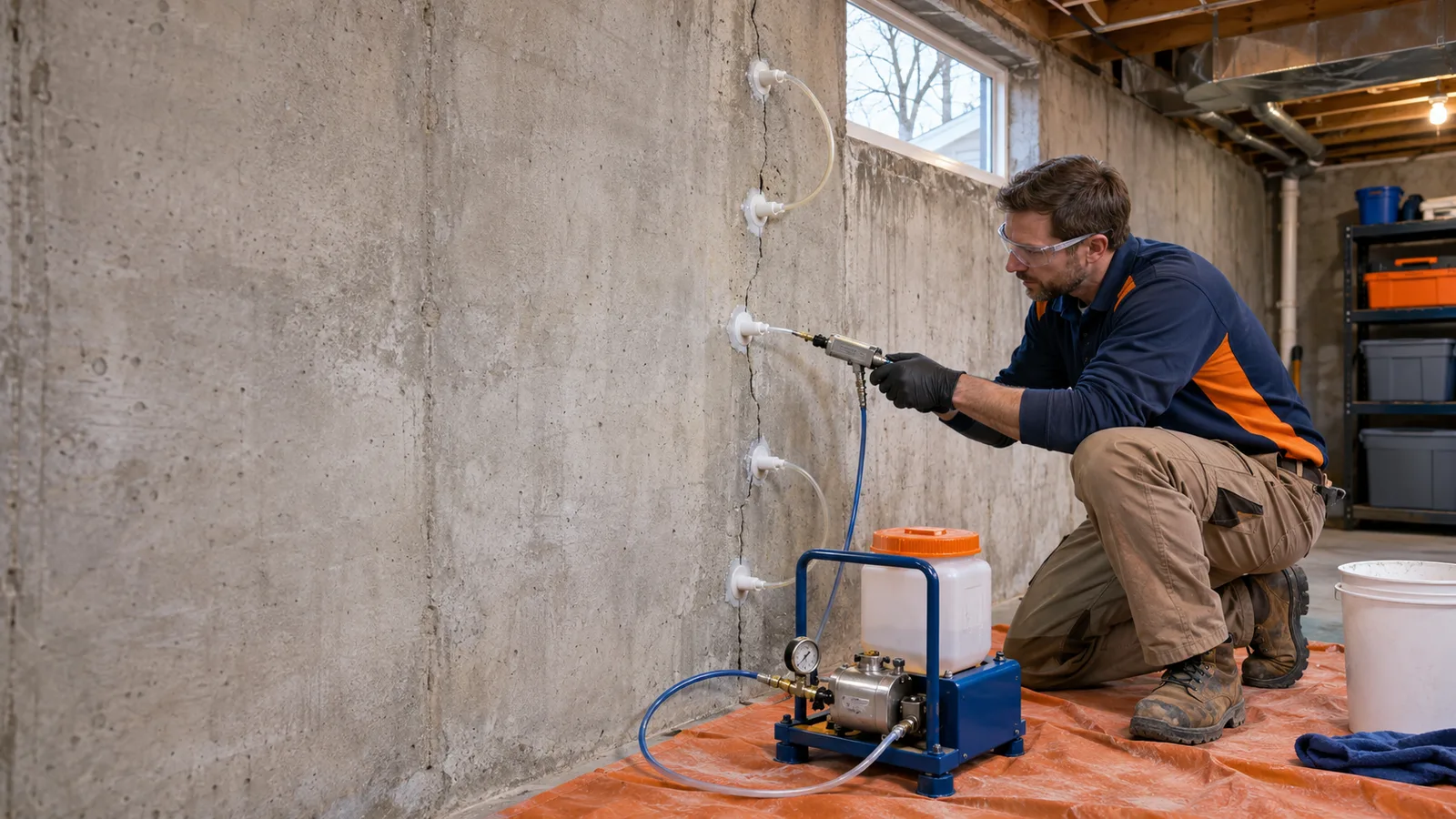
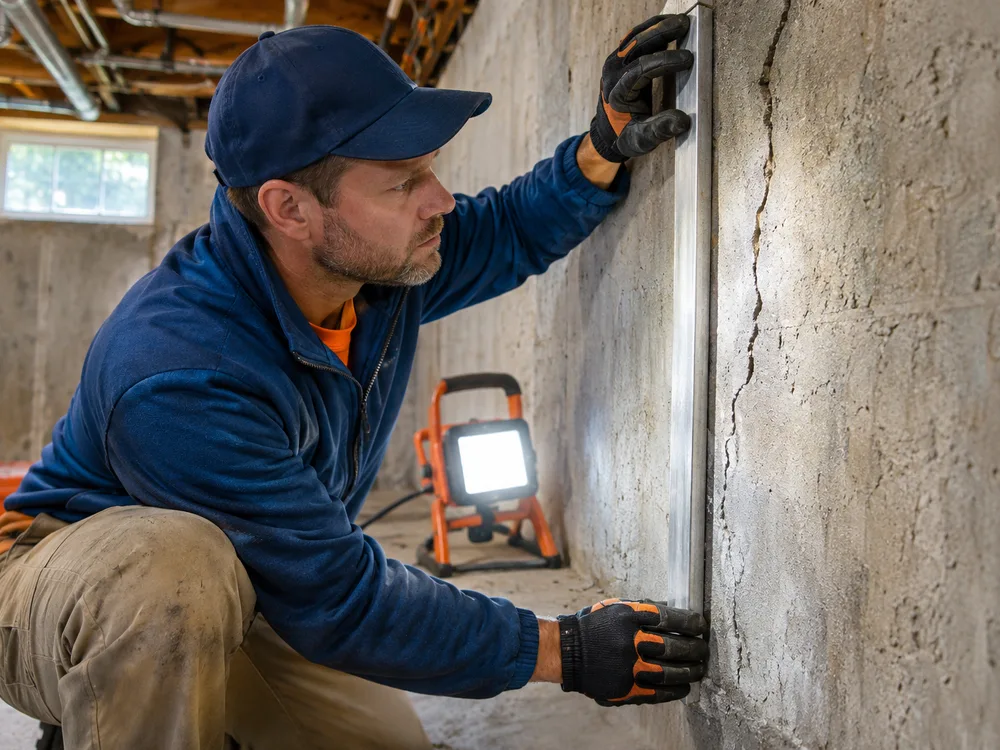
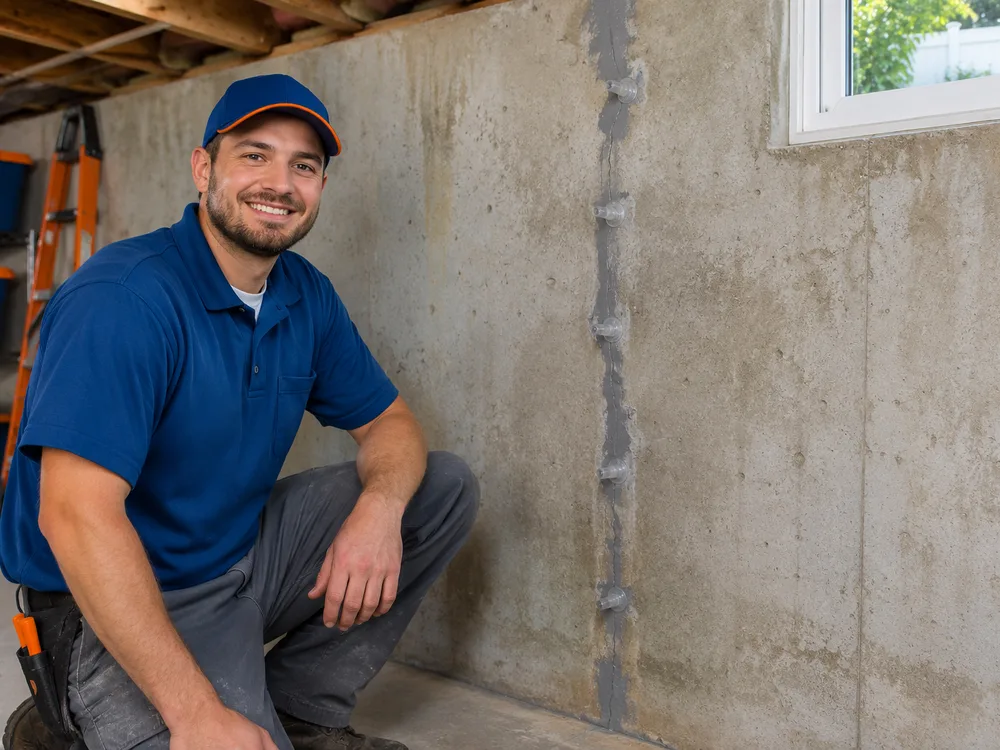
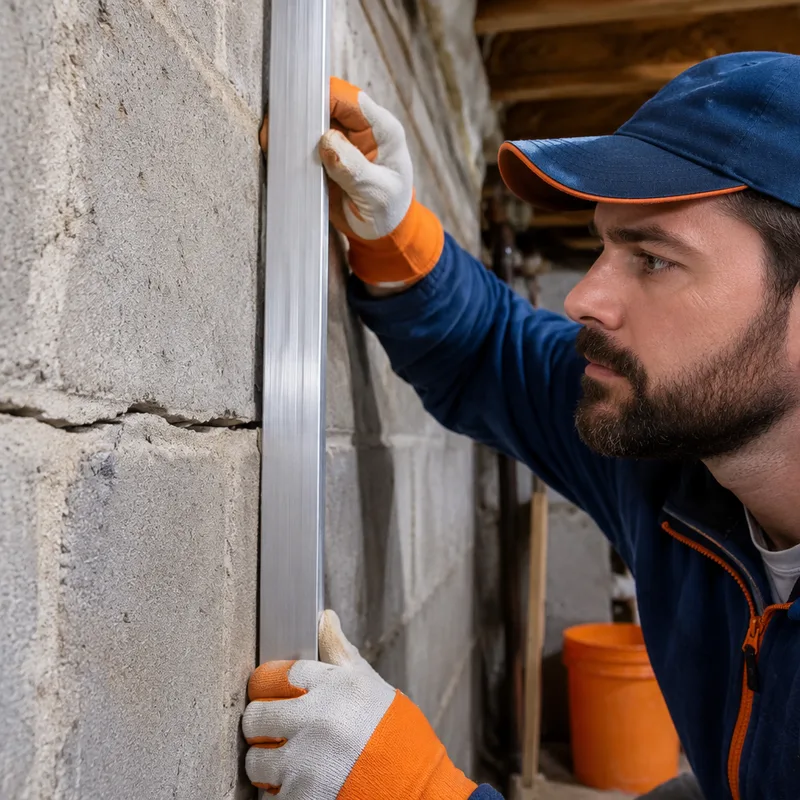
A crack in a basement wall may admit water, indicate movement, or do both. Its direction, width, location, and condition help determine the right repair. A contractor should examine the crack from end to end, look for staining or mineral deposits, and check whether the wall is bowed, displaced, or separated at the crack.
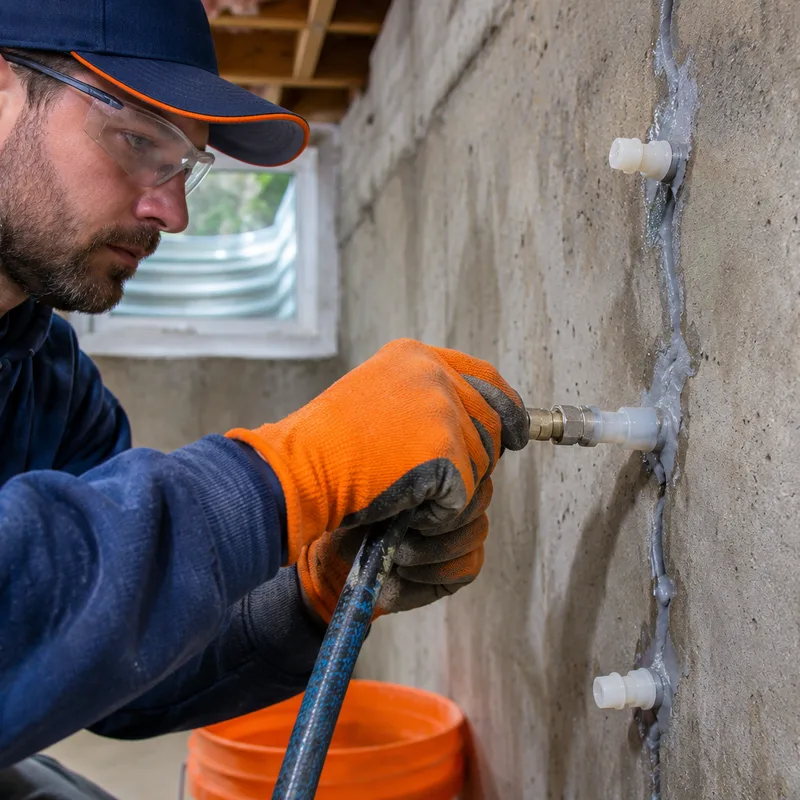
Vertical and diagonal cracks in poured concrete are often evaluated for injection. Stair-step cracks through mortar joints require a closer look at masonry movement. Horizontal cracks or visible inward bowing can indicate lateral pressure on the wall and may call for structural reinforcement rather than injection alone. A contractor may also examine the exterior grade, downspout discharge, window wells, and the wall-to-floor joint because water reaching the foundation can keep a repaired area under pressure.
Bensalem includes homes with poured-concrete foundations, concrete-block walls, and older masonry assemblies. Seasonal rain, freeze-thaw cycles, and saturated soil can expose cracks that appeared dry during other conditions. Water marks matter: a white powdery deposit called efflorescence suggests moisture has moved through the masonry, while rust-colored staining near a crack can point to contact with embedded steel or metal components.
Bensalem Basement Waterproofing connects callers with basement waterproofing contractors serving Bensalem, PA who also handle foundation crack diagnosis and repair. You speak with the contractor directly, discuss what is visible, receive the contractor's quote, and decide whether to proceed.