Water-entry assessment
The contractor checks for seepage, plumbing leaks, standing water, poor exterior drainage, and signs that a sump or interior drainage channel may be needed.
Serving Bensalem, Pennsylvania & surrounding areas
Calls answered around the clock
One call connects you directly with a local contractor who handles crawl space moisture control and encapsulation.
One direct phone call
Local contractor connection
Discuss moisture conditions directly
You decide what happens next
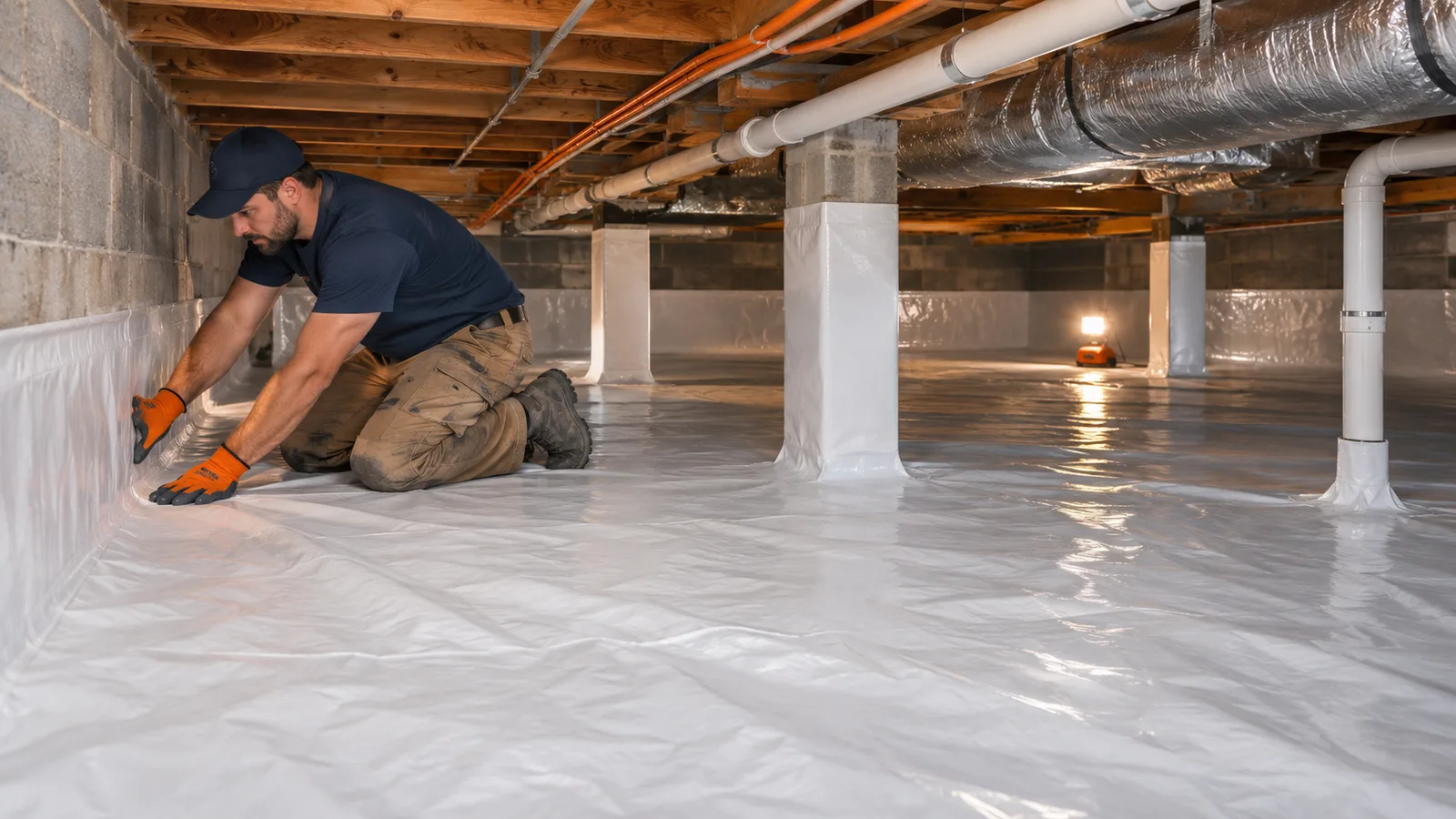
Crawl space encapsulation in Bensalem, PA addresses ground moisture, humid air, condensation, and musty conditions beneath a home. The work typically includes clearing accessible debris, dealing with active water entry, covering exposed soil, sealing foundation walls and penetrations, closing or conditioning vents, and controlling humidity.
The correct design depends on where the moisture comes from. Seasonal rain and humid southeastern Pennsylvania summers can expose weak drainage, open vents, unsealed masonry, and bare earth. A contractor should inspect the foundation walls, floor, rim joists, piers, plumbing penetrations, ductwork, grading, downspout discharge, and any sump system before recommending materials.
A vapor barrier alone may be suitable when ground vapor is the main concern. Standing water or foundation seepage calls for drainage or water-management work before the liner is sealed. Persistent airborne moisture may also require a crawl-space dehumidifier with a permanent drain. Through Bensalem Basement Waterproofing, one call connects homeowners with local basement waterproofing contractors throughout Bensalem, PA who can inspect crawl space conditions, explain the proposed scope, and provide a quote directly.
Homes near the Delaware River and Neshaminy Creek should be evaluated according to conditions at the individual property rather than assumptions based on the wider area. Lot grading, gutter discharge, foundation construction, and the crawl space's elevation can change the moisture pattern from one house to the next.
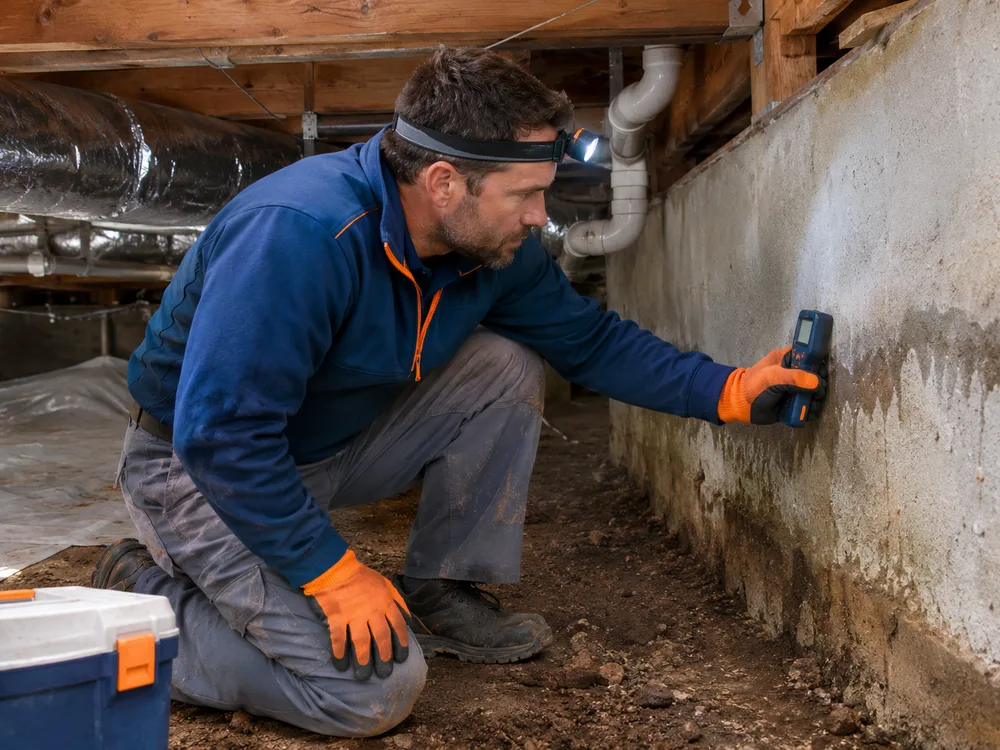
The scope should respond to the actual sources of liquid water, soil vapor, outside air, and elevated humidity beneath the home.
The contractor checks for seepage, plumbing leaks, standing water, poor exterior drainage, and signs that a sump or interior drainage channel may be needed.
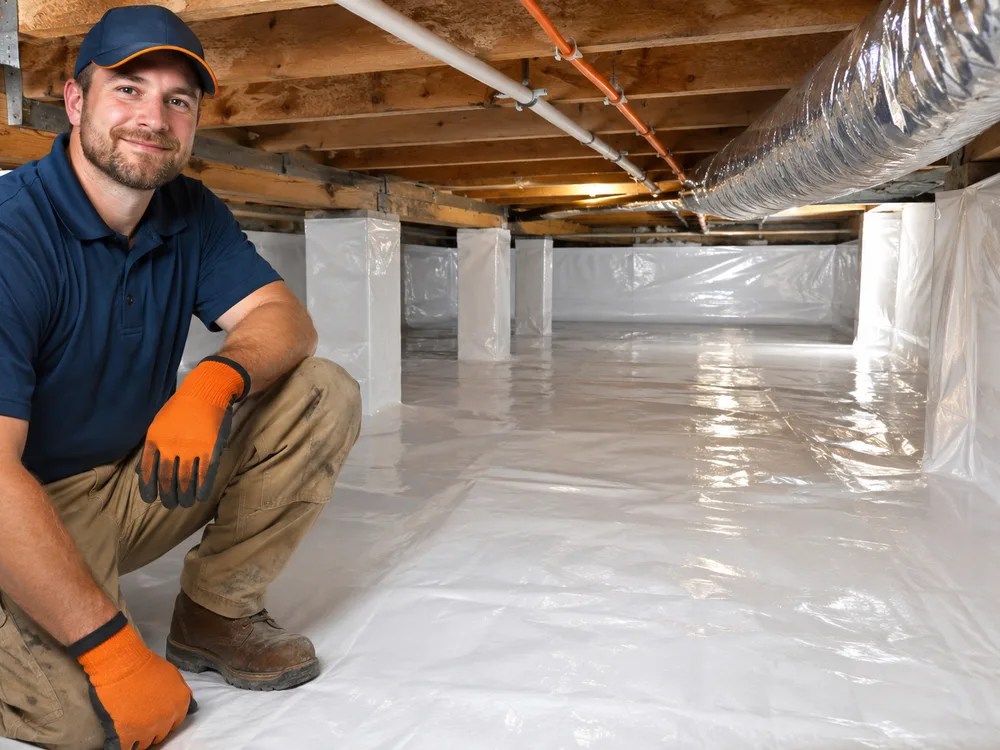
A reinforced liner can cover the ground and extend up masonry walls and around piers. Seams, edges, and penetrations are sealed to limit soil vapor.
Rim joists, vents, access doors, and service openings may need attention. Existing insulation is checked for sagging, dampness, contamination, or an unsuitable placement.
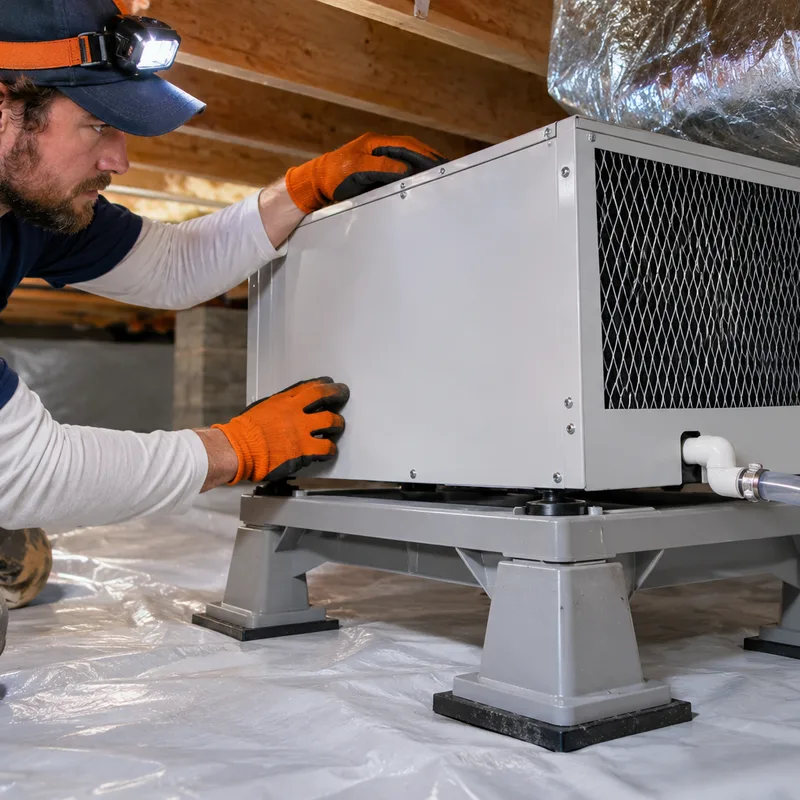
A crawl-space-rated dehumidifier may be specified when sealing alone will not maintain suitable conditions. The unit needs drainage and access for maintenance.
You discuss findings, materials, drainage, dehumidification, and quote terms with the contractor. You decide whether the proposed work fits the home.
Call, enter your ZIP code, and you are connected directly with a local contractor who serves that area. There is no form or email wait.
The contractor examines the crawl space and exterior drainage conditions. Mold-like growth, damaged wood, wet insulation, efflorescence, odors, and standing water can point to different causes.
The proposal should state whether the job includes drainage, a sump system, debris removal, liner thickness, wall attachment, seam treatment, vent sealing, insulation, and dehumidification.
Accessible debris and unsuitable material are removed as specified. Water-management work comes first, followed by the liner, sealing details, insulation changes, and humidity-control equipment in the agreed sequence.
The completed crawl space should retain access to valves, drains, mechanical equipment, and termite inspection areas where required. The contractor should explain filter, drain, sump, and dehumidifier maintenance.
Stop working through a list of contractors. One call connects you directly with a local crawl space contractor who serves the Bensalem area, and you decide what happens after discussing the job and quote.
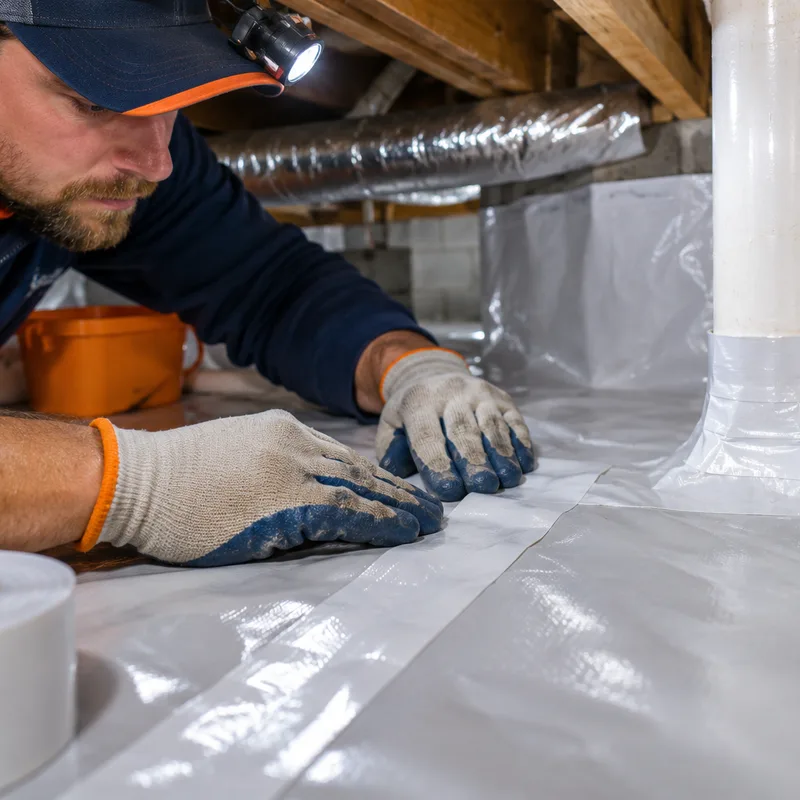
Drainage is needed when liquid water enters or collects beneath the home; a liner should not be used to hide an active water problem. Ask the contractor to identify whether the source is wall seepage, grading, downspout discharge, groundwater, or a plumbing leak and to show how the proposed system manages it.
Compare the written scope rather than the liner alone. Each proposal should identify the material, covered surfaces, seam method, wall attachment, pier treatment, penetration sealing, vent treatment, debris removal, drainage provisions, access details, and any exclusions.
Encapsulation controls moisture but does not automatically include microbial remediation or structural repair. The contractor should distinguish moisture-control work from cleaning, removal of contaminated material, pest damage, and replacement of weakened framing.
A dehumidifier is not automatically required for every crawl space. Its need depends on the enclosure design, measured humidity, air leakage, drainage, duct conditions, and whether the crawl space is treated as conditioned or unconditioned space.
Vents are commonly sealed as part of a closed crawl space design, but the complete moisture and air-control strategy must support that choice. Ask how the contractor plans to handle outside air, combustion equipment, drying, insulation, and applicable local code requirements.
Plumbing shutoffs, cleanouts, sump equipment, drains, electrical components, mechanical equipment, and inspection points should remain usable. Ask the installer to explain how access doors, service penetrations, and required termite inspection gaps will be handled.
The local contractor provides the quote and explains the proposed scope directly. Review material specifications, preparation, water management, equipment, exclusions, maintenance, payment terms, and any warranty terms before deciding whether to proceed.
One call connects you with a local contractor who handles crawl space encapsulation, vapor barriers, waterproofing, and dehumidification. You talk with the contractor directly and decide what happens next.